What Drives the Price of Chiropractic Care in Cary, NC
January 5, 2026
Introduction
Chiropractic care is one of the most accessible ways to manage back pain, neck stiffness, headaches, and mobility issues—but many Cary residents hesitate before booking because pricing feels unpredictable. One clinic advertises a $20 adjustment. Another quotes something that feels closer to a medical bill. That gap creates uncertainty, especially for first-time patients who don’t know what they’re actually paying for.
The truth is that chiropractic pricing isn’t random. It reflects how care is delivered, how much time is involved, and what level of treatment your body actually needs. Understanding those factors helps you choose care with confidence instead of guessing or overpaying.
What Actually Determines Chiropractic Pricing
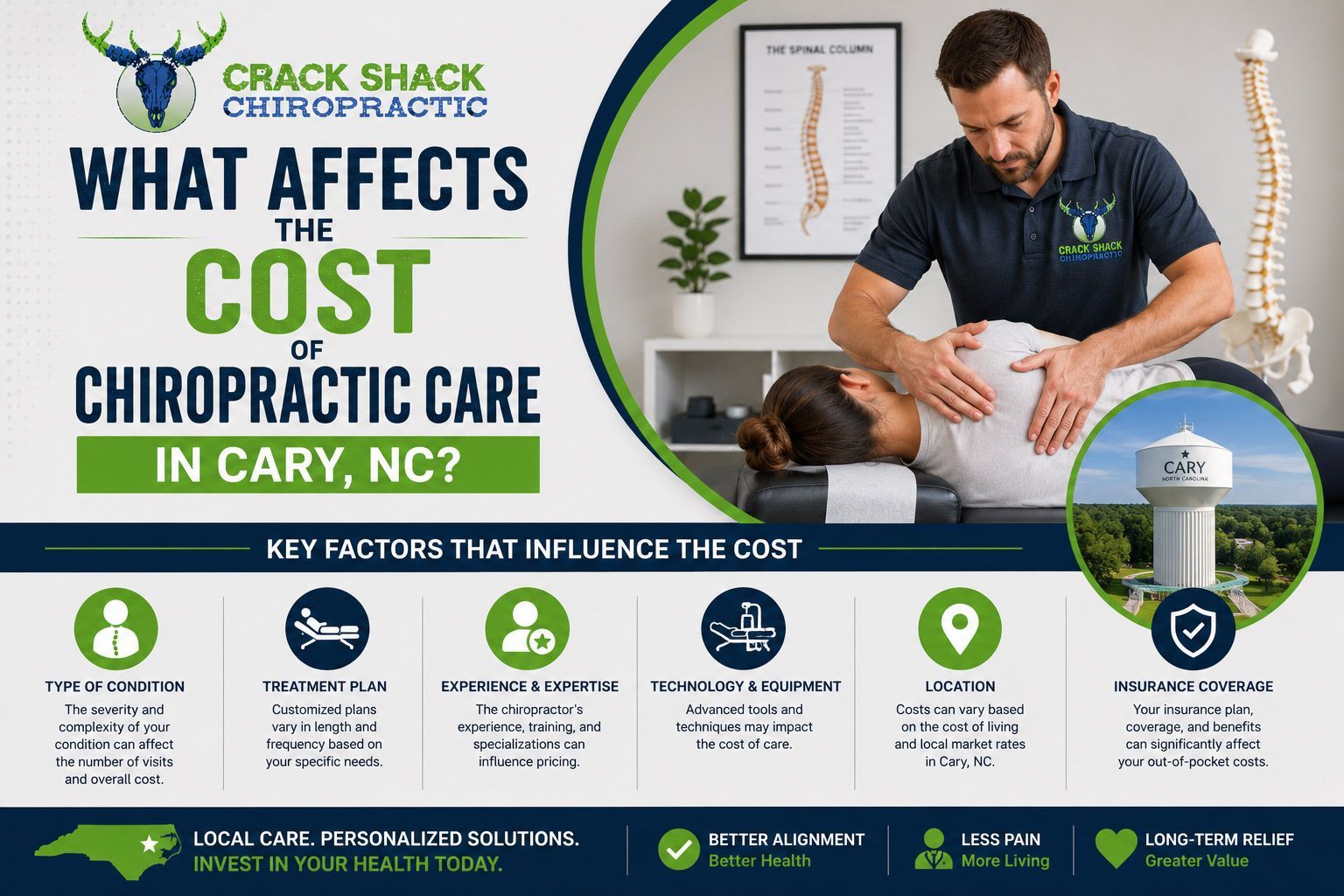
Several forces shape what a chiropractic visit costs. Each one changes the structure of the appointment itself.
Scope of the Visit
A basic adjustment focuses on spinal alignment. It typically includes a brief check-in, a quick assessment, and hands-on manipulation. These visits are fast and efficient, which is why some clinics can offer very low entry pricing.
Expanded sessions increase scope. They may include soft tissue work, muscle release, mobility coaching, or targeted care for a specific problem area. These visits take longer and demand more physical effort and training from the provider. The higher price reflects the added depth of care, not a change in quality.
Time Per Appointment
Time is a direct cost driver. A five-minute alignment and a thirty-minute treatment block consume very different amounts of clinic capacity.
Longer appointments reduce how many patients a chiropractor can see in a day and increase physical strain. Clinics built around speed and walk-in access can keep prices low. Clinics centered on longer, layered sessions must charge more to remain sustainable. Each model exists to serve different needs.
Provider Experience
Chiropractors invest years in education, licensing, and hands-on training. Many pursue advanced techniques in areas like sports performance, posture correction, or injury rehabilitation.
That expertise becomes part of what you are paying for. A provider who identifies root causes quickly often produces better outcomes in fewer visits. Even if a single session costs more, experience can reduce long-term expense by shortening recovery time.
Clinic Structure
How a clinic operates shapes pricing. Overhead varies based on space, equipment, staffing, and scheduling style.
A lean clinic with streamlined flow can operate on slimmer margins. A larger clinic with multiple rooms, extended hours, and layered services must price differently. This is why two chiropractors in the same city can deliver competent care with very different price points.
Delivery Format
Chiropractic care in Cary appears in more than one form. In-clinic visits, pop-up market sessions, workplace wellness events, and group adjustments all use different logistics.
Mobile and event-based care often reduce overhead and allow flat, accessible rates. Traditional clinic visits reflect the cost of space, staffing, and longer appointment blocks. The format changes the economics of the visit.
What Cary Patients Typically See in Pricing
Most patients encounter a predictable structure when comparing chiropractic options. It often looks like this:
| Visit Type | What It Covers | Why Cost Changes |
|---|---|---|
| Basic adjustment | Spinal alignment | Fast, focused session |
| Extended session | Adjustment plus muscle work | More time and skill |
| First visit | Evaluation and treatment | Added assessment |
| Mobile/event care | Group-based services | Lower overhead |
Low entry pricing makes chiropractic approachable. Expanded services exist for layered or chronic issues. The important distinction is that you are not paying for a mystery service—you are paying for time, scope, and clinical complexity.
How to Make Chiropractic Care Cost-Effective
Cost-effective care comes from matching treatment to need, not from chasing the lowest price.
- Start with the simplest option.
If your issue is recent or mild, a basic adjustment is often enough to test whether chiropractic helps. - Pay attention to your body’s response.
After each visit, notice whether pain decreases, movement improves, or symptoms return quickly. - Adjust your care level accordingly.
Quick relief may only require consistency. Persistent or complex issues may justify deeper sessions. - Avoid overbuying care.
Not every ache needs extended treatment. Over-treatment wastes both money and time. - Ask clear questions.
A good clinic will explain what each service does, why it is recommended, and whether it is optional.
Frequently Asked Questions
Why do some chiropractic visits cost so little?
Short, focused adjustments require less time and overhead. Clinics built for efficiency can pass that savings to patients.
Are add-on services necessary?
They help when muscle tension, mobility loss, or chronic patterns limit progress. They are not required for every patient.
Does insurance always lower the cost?
Not always. Some plans limit visits or reimburse only part of the charge. Out-of-pocket care can be simpler and more predictable.
Is cheaper care lower quality?
No. Price reflects structure, not competence. A skilled chiropractor can deliver excellent results in a short session.
How many visits do most people need?
It depends on the condition. Acute strain may resolve in a few visits. Long-term posture or injury patterns take longer.
Conclusion
Chiropractic pricing in Cary is shaped by time per visit, scope of care, provider experience, clinic structure, and how services are delivered. A low-cost adjustment reflects a streamlined model, not reduced value. Expanded sessions represent deeper clinical involvement for bodies that need more. When you understand those differences, you stop choosing emotionally and start choosing intentionally. The real question is not what is cheapest, but what level of care your body needs right now. Practices like Crack Shack Chiropractic make that decision easier by pairing accessible entry pricing with optional depth, allowing Cary residents to get effective care without financial guesswork.