How Does Spinal Alignment Affect Everyday Energy Levels?
August 30, 2026
Introduction
By 3 PM, a lot of people feel like their battery is already dead.
Not sleepy. Not sick. Just physically drained in a way that makes simple things feel harder than they should. Sitting comfortably takes effort. The shoulders feel heavy. The neck feels compressed. Standing up from a chair feels stiff even though the day was spent mostly sitting still.
Then the cycle repeats the next morning.
Coffee usually gets blamed first. Sleep schedules come second. Stress gets blamed for almost everything else. But many people in Cary, North Carolina overlook another possibility entirely: their body may be wasting energy compensating for poor spinal movement and posture all day long.
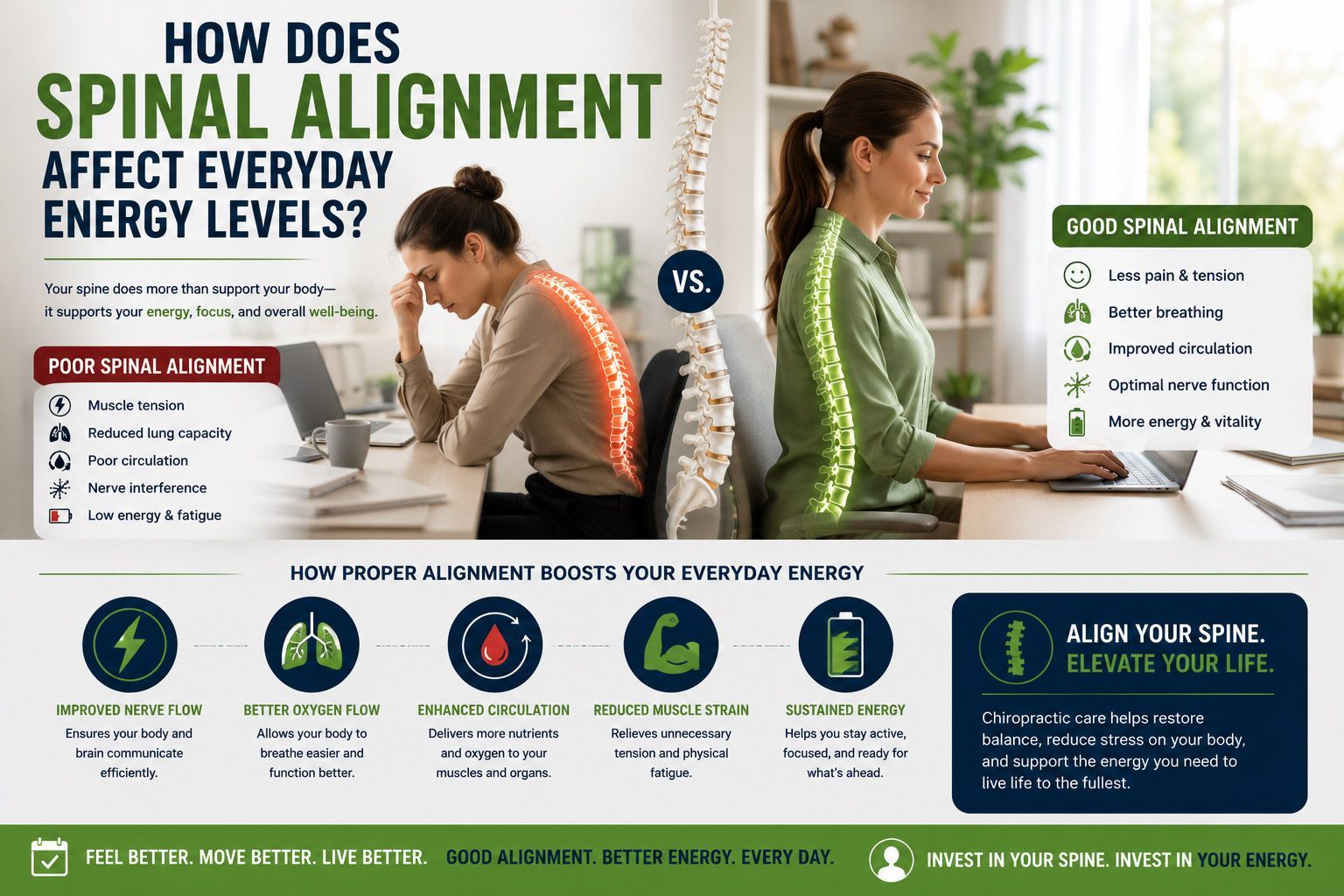
The body is designed to move efficiently. When spinal alignment becomes compromised, muscles often start overworking to stabilize the neck, shoulders, lower back, and hips. That constant physical compensation may not feel dramatic immediately, but over time it can contribute to fatigue, tension, stiffness, and reduced physical comfort throughout ordinary daily routines.
Your Body Uses Energy Just to Hold You Upright
People often associate fatigue with exercise or physical labor.
But posture itself requires energy.
Every minute the body spends sitting, standing, walking, or turning, muscles are working behind the scenes to keep the spine balanced and supported. When alignment and movement are functioning efficiently, that workload stays relatively manageable. When posture becomes strained or movement becomes restricted, the workload increases.
Compensation Creates Continuous Physical Demand
If one area loses mobility, another area usually works harder to compensate.
For example:
| Movement Restriction | Common Compensation |
|---|---|
| Tight upper back | Neck overuse |
| Weak core support | Lower back strain |
| Poor sitting posture | Shoulder tension |
| Restricted hip mobility | Spinal stress |
| Forward head posture | Upper back fatigue |
The body can tolerate compensation for a while. The problem is that most modern routines repeat these patterns every single day.
Poor Posture Quietly Drains Physical Energy
A lot of posture-related fatigue develops so gradually that people normalize it.
They assume:
- sitting all day is supposed to feel exhausting
- neck tightness is part of office work
- afternoon headaches are normal
- shoulder tension is unavoidable
But posture changes how efficiently the body functions mechanically.
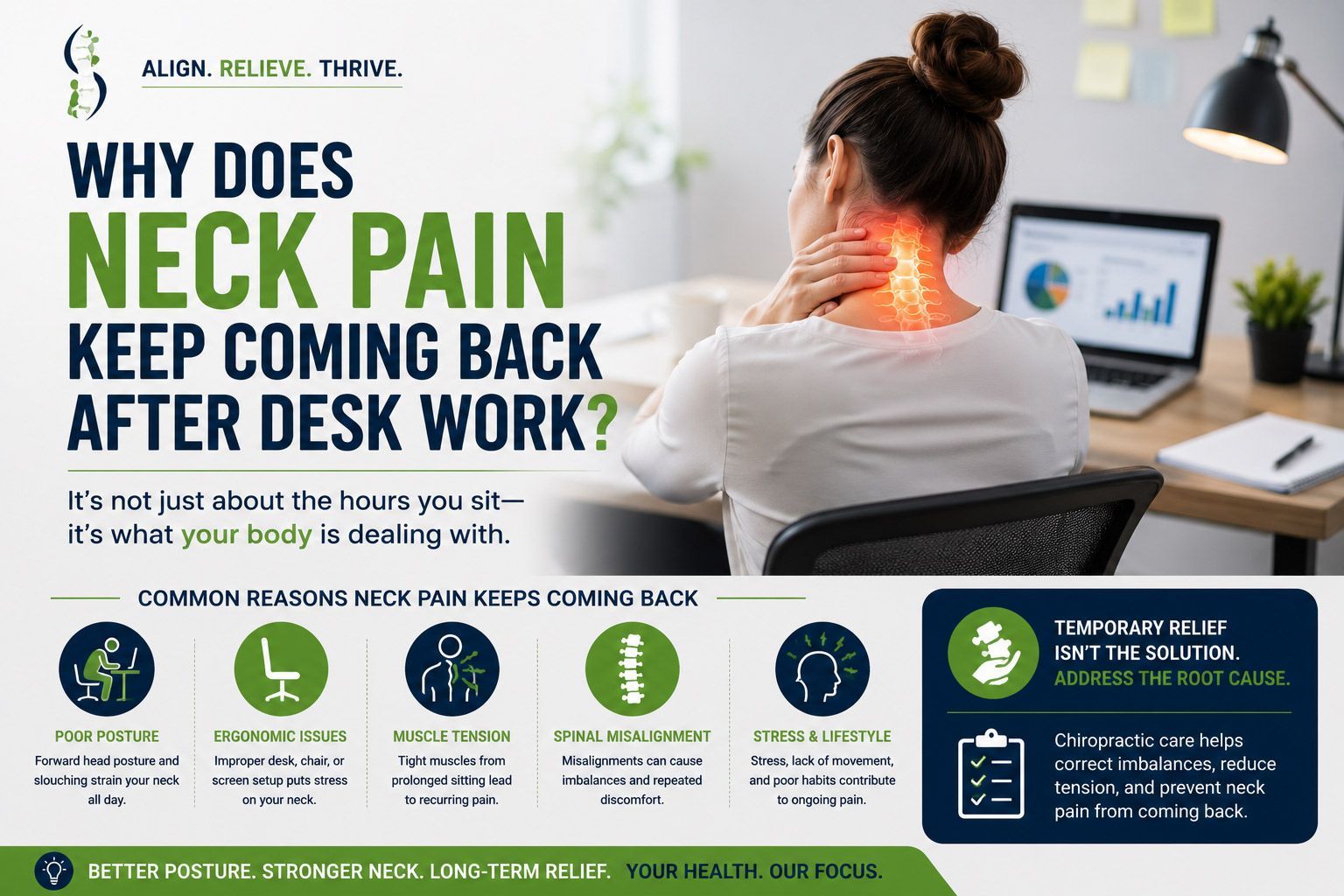
Forward Head Posture Forces Muscles to Work Overtime
One of the most common posture problems today involves the head drifting forward while using screens.
That may not sound serious until you realize the neck and upper back muscles must continuously support that shifted weight for hours at a time.
Over time, this may contribute to:
- muscle fatigue
- stiffness
- tension headaches
- reduced concentration
- shoulder tightness
- general physical exhaustion
For many desk workers in Cary, the body finishes the workday feeling physically stressed despite very little actual movement.
Restricted Movement Makes Everyday Tasks More Demanding
The body is most efficient when joints move properly.
When spinal mobility decreases, even normal movement may require more effort.
Stiffness Forces Other Areas to Compensate
If the thoracic spine becomes restricted, the neck and shoulders may absorb more strain. If the hips lose mobility, the lower back often compensates during walking or standing.
That extra effort may not feel dramatic in one moment, but accumulated strain throughout the day can affect overall energy levels significantly.
Signs Movement Efficiency May Be Reduced
Some common examples include:
- feeling stiff after sitting briefly
- getting tired from standing too long
- frequent stretching throughout the day
- discomfort during simple movement
- tension building during desk work
- soreness without strenuous activity
These patterns are often connected to how the body is moving — or failing to move — efficiently.
Why Sedentary Work Can Feel So Physically Exhausting
Many professionals in Cary spend entire days sitting in front of screens while barely moving.
Ironically, that lack of movement can become physically draining.
Static Positions Fatigue the Body
The body handles motion better than stillness.
When someone remains in the same seated posture for hours, muscles around the:
- neck
- shoulders
- upper back
- lower back
- hips
…may stay engaged continuously without enough relief.
That constant low-level muscular effort can eventually contribute to fatigue even in people who are otherwise healthy.
The Problem Is Repetition
Most posture strain is not caused by one bad sitting position.
It comes from repeating the same stressful mechanics daily for months or years.
Sleep Quality and Spinal Tension Are Often Connected
Some people sleep for seven or eight hours and still wake up feeling physically tired.
In many cases, ongoing tension and spinal discomfort may interfere with how well the body actually recovers overnight.
Physical Discomfort Can Interrupt Rest
People dealing with posture-related tension often:
- change sleeping positions repeatedly
- wake up stiff
- experience neck tightness in the morning
- feel lower back discomfort overnight
If muscles remain tense during sleep, recovery quality may decrease even when total sleep time seems adequate.
Stress and Physical Tension Feed Each Other
Mental stress and physical tension are closely connected.
During stressful periods, people often:
- raise their shoulders unconsciously
- clench their jaw
- tighten neck muscles
- breathe more shallowly
When that stress combines with poor posture or spinal restriction, the body may stay physically tense for most of the day.
That ongoing muscular contraction requires energy.
Over time, the combination of stress and mechanical strain may leave people feeling physically depleted much faster.
How Chiropractic Care May Help Support Physical Function
Many patients seeking chiropractic care are not only looking for pain relief. They are trying to feel more comfortable moving throughout the day.
Chiropractic Care Often Focuses On:
| Treatment Area | Purpose |
|---|---|
| Spinal mobility | Improve movement efficiency |
| Posture evaluation | Identify repetitive strain |
| Joint restriction | Reduce compensation patterns |
| Muscle tension | Improve physical comfort |
| Ergonomic guidance | Support healthier daily habits |
For patients in Cary, North Carolina, chiropractic care may help address physical stress patterns contributing to stiffness, fatigue, and recurring discomfort.
Small Daily Changes Often Matter More Than Major Changes
The body usually responds best to consistent movement habits rather than extreme corrections.
Habits That May Help Reduce Physical Fatigue
- Taking movement breaks during desk work
- Adjusting monitor and chair positioning
- Avoiding prolonged forward head posture
- Improving upper back mobility
- Staying physically active consistently
Small adjustments repeated daily often have a greater long-term impact than occasional large efforts.
Frequently Asked Questions
Can poor posture affect energy levels?
Yes. Poor posture may increase muscular strain and force the body to use more energy maintaining balance and stability.
Why do desk workers feel physically tired after sitting all day?
Prolonged sitting can create continuous muscle tension and reduce movement efficiency throughout the spine and surrounding muscles.
Can spinal alignment affect concentration?
Ongoing tension and physical discomfort may contribute to fatigue and make it harder to stay comfortable during long workdays.
Does stiffness make the body work harder?
Restricted mobility often forces nearby muscles and joints to compensate, increasing physical effort during movement.
Can chiropractic care help with posture-related fatigue?
Chiropractic care may help improve mobility, posture awareness, and movement patterns associated with physical tension and discomfort.
Conclusion
Spinal alignment affects far more than posture alone. When the body compensates around stiffness, tension, or restricted movement throughout the day, ordinary activities may require more physical effort than they should. Over time, that constant strain can contribute to fatigue, discomfort, and reduced everyday energy levels.
For many people in Cary, North Carolina, improving movement quality, posture habits, and spinal mobility may help reduce unnecessary physical stress throughout daily routines. Supporting how the body moves efficiently can play an important role in overall physical comfort and long-term wellness.
At Crack Shack Chiropractic, patients can learn more about chiropractic care focused on mobility, posture support, and helping the body function more comfortably through personalized treatment approaches.