Why Does Neck Pain Keep Coming Back After Desk Work?
August 2, 2026

Introduction
A lot of desk-related neck pain disappears just long enough to become misleading.
Someone finishes work, stretches a little, sleeps, and wakes up feeling mostly fine. Then by mid-afternoon the next day, the tightness returns. The shoulders rise unconsciously toward the ears. Turning the head starts feeling stiff again. By the end of the week, even sitting comfortably becomes difficult.
That repeating cycle is what frustrates many office workers in Cary, North Carolina.
The pain keeps returning even though there was no accident, no heavy lifting injury, and no major physical trauma. The body simply spent too many hours repeating positions it was never designed to maintain continuously.
Desk work creates a unique kind of physical stress because the strain builds gradually. Small posture problems repeated daily can eventually affect spinal mobility, muscle balance, circulation, and movement patterns throughout the neck and upper back.
That is why recurring neck pain after desk work often has less to do with one bad day and more to do with what the body is repeatedly doing every single day.
Sitting Still for Hours Changes How the Neck Functions
The neck is built for movement.
Desk work usually does the opposite.
Most office routines involve prolonged sitting with very limited variation in posture for several hours at a time. Even when someone feels relaxed, the muscles supporting the head and shoulders are still working constantly to maintain position.
The Head Becomes Heavier the Farther It Moves Forward
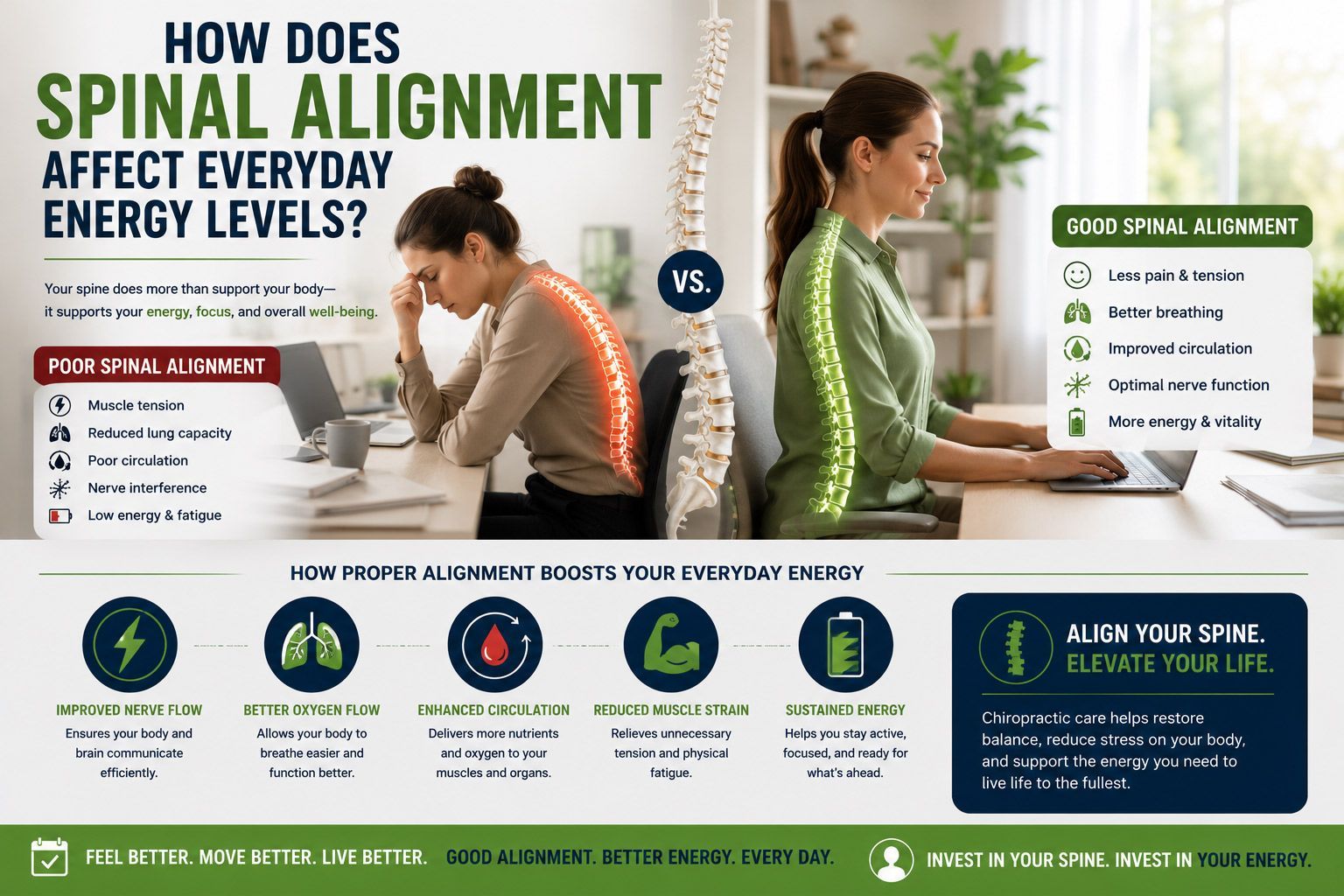
One of the biggest contributors to recurring neck pain is forward head posture.
This happens when the head gradually shifts in front of the shoulders while looking at screens throughout the day.
The farther forward the head moves, the harder the neck and upper back muscles must work to support it.
Over time, this can contribute to:
- Muscle fatigue
- Joint stiffness
- Upper back tightness
- Reduced mobility
- Recurring tension headaches
- Shoulder discomfort
Many people in Cary who work at desks daily do not realize how much time they spend in this posture until symptoms become persistent.
Why Neck Pain Often Returns Even After Rest
A common misconception is that temporary symptom relief means the problem has resolved.
In reality, the body may simply calm down briefly before returning to the same stressful movement patterns again.
The Daily Routine Usually Stays the Same
Someone may stretch at night or rest over the weekend, but if they return Monday morning to:
- The same workstation
- The same sitting posture
- The same monitor position
- The same laptop setup
- The same limited movement schedule
…the physical stress starts building again almost immediately.
That is why desk-related neck pain often feels repetitive rather than random.
Small Posture Habits Create Continuous Strain
Neck pain is rarely caused by only one position.
Usually, it develops from hundreds of small posture habits repeated throughout the day.
Common Desk Habits That Increase Neck Stress
| Habit | Potential Effect |
|---|---|
| Looking down at a laptop | Neck muscle strain |
| Leaning toward the screen | Forward head posture |
| Sitting without back support | Upper spinal tension |
| Holding the phone between shoulder and ear | Muscle imbalance |
| Working without movement breaks | Joint stiffness |
Individually, these habits may not feel significant. Combined over weeks and months, they can create enough mechanical stress to trigger recurring discomfort.
Stress and Desk Work Often Overlap
Many people notice their neck pain becomes worse during stressful work periods.
That is not a coincidence.
Muscle Tension Increases During Stress
Stress commonly causes unconscious tightening in areas such as:
- The neck
- Shoulders
- Jaw
- Upper back
When combined with prolonged sitting, those muscles may stay contracted for hours without enough movement or relaxation.
This constant tension can eventually contribute to:
- Neck stiffness
- Limited range of motion
- Headaches
- Shoulder pain
- Fatigue
For office professionals in Cary, North Carolina, mental stress and physical posture stress often reinforce each other throughout the workday.
Why Stretching Alone Sometimes Is Not Enough
Many people try to manage recurring neck pain by stretching throughout the day.
Stretching may help temporarily, but symptoms often return because the underlying strain continues afterward.
The Problem Usually Involves More Than Tight Muscles
Recurring neck pain may also involve:
- Reduced spinal mobility
- Poor workstation ergonomics
- Weak postural muscles
- Repetitive movement strain
- Limited thoracic spine movement
If those contributing factors remain unchanged, temporary relief methods may only provide short-term improvement.
How Poor Desk Ergonomics Affect the Spine
Workstation setup plays a larger role than many people realize.
Small ergonomic problems repeated daily can significantly increase physical stress.
Common Ergonomic Problems
Monitor Positioned Too Low
This encourages constant downward head movement.
Laptop-Only Workstations
Laptops often force the neck and shoulders into awkward positions for long periods.
Unsupported Lower Back
Poor lumbar support can affect the entire spinal chain upward into the neck.
Arm Positioning
Improper keyboard or mouse height may increase shoulder tension and upper back strain.
Even small ergonomic improvements may reduce repetitive stress significantly over time.
Why Movement Matters More Than “Perfect Posture”
A lot of people think posture means sitting perfectly upright all day.
In reality, the body handles movement better than prolonged stillness.
Static Positions Increase Fatigue
Remaining in one position for several hours can:
- Reduce circulation
- Increase muscle tension
- Stiffen joints
- Fatigue postural muscles
Regular movement breaks are often just as important as posture correction itself.
Helpful Movement Habits During Desk Work
- Standing periodically throughout the day
- Adjusting sitting position frequently
- Walking briefly between tasks
- Stretching the chest and upper back
- Rotating the neck gently during breaks
Small movement habits repeated consistently may help reduce accumulated physical stress.
How Chiropractic Care May Help Desk-Related Neck Pain
Chiropractic care often focuses on improving movement quality and reducing mechanical stress throughout the spine.
For patients experiencing recurring neck pain after desk work in Cary, treatment may involve evaluating the movement patterns contributing to the problem.
Chiropractic Care May Focus On:
| Treatment Focus | Purpose |
|---|---|
| Spinal mobility | Reduce joint restriction |
| Posture evaluation | Identify strain patterns |
| Muscle tension | Improve movement comfort |
| Ergonomic guidance | Reduce daily stress |
| Movement habits | Support long-term function |
The goal is often not only relieving symptoms temporarily, but improving how the body handles repetitive daily activity.
Why Desk-Related Neck Pain Should Not Be Ignored
Recurring neck pain sometimes becomes normalized because it develops gradually.
People adapt around it by:
- Avoiding certain movements
- Stretching constantly
- Limiting activity
- Changing sleep positions
- Using pain relievers regularly
Over time, however, unresolved movement dysfunction may contribute to more persistent stiffness and broader compensation patterns.
Addressing the issue earlier may help prevent discomfort from becoming more chronic and difficult to manage later.
Frequently Asked Questions
Why does my neck hurt more after working at a desk all day?
Prolonged sitting, forward head posture, and limited movement can increase strain on the neck and upper back muscles.
Can poor posture cause chronic neck pain?
Yes. Repetitive posture strain may gradually contribute to muscular tension, joint stiffness, and recurring discomfort.
Why does neck pain keep returning even after rest?
Symptoms often return when the body repeatedly resumes the same stressful movement and posture habits during daily work routines.
Can stress make neck pain worse?
Yes. Stress commonly increases muscle tension in the neck, shoulders, and upper back.
Can chiropractic care help desk-related neck pain?
Chiropractic care may help improve spinal mobility, posture awareness, and movement patterns contributing to recurring neck discomfort.
Conclusion
Desk-related neck pain often keeps returning because the body repeatedly experiences the same physical stress patterns every workday. Prolonged sitting, forward head posture, limited movement, and muscle tension can gradually affect how the neck and upper back function over time.
For many people in Cary, North Carolina, improving posture habits, workstation setup, and spinal mobility may help reduce recurring discomfort associated with desk work. Addressing movement restrictions earlier can also help prevent chronic stiffness and ongoing compensation patterns from developing later.
At Crack Shack Chiropractic, patients can learn more about chiropractic care focused on posture support, mobility, and helping reduce physical stress caused by repetitive daily routines.