Should You See a Chiropractor or Massage Therapist First?
November 1, 2026

Two Good Options. One Important Distinction.
Your back has been aching for a week. You have finally decided to do something about it. Now you face a decision that trips up more people than it should: do you book with a chiropractor or a massage therapist? Both address musculoskeletal discomfort. Both can reduce tension, improve how you feel, and play a meaningful role in recovery. The difference lies in what each discipline is actually treating — and choosing the right starting point can save you time and get you to relief faster.
In the Triangle area of North Carolina, many wellness providers in Cary, NC, Raleigh, and Durham now offer both services, sometimes within the same building. That proximity makes the question more relevant than ever. Here is how to think through it.
What Each Practitioner Is Actually Treating
Before comparing the two, it helps to be precise about what each discipline targets.
Chiropractic care
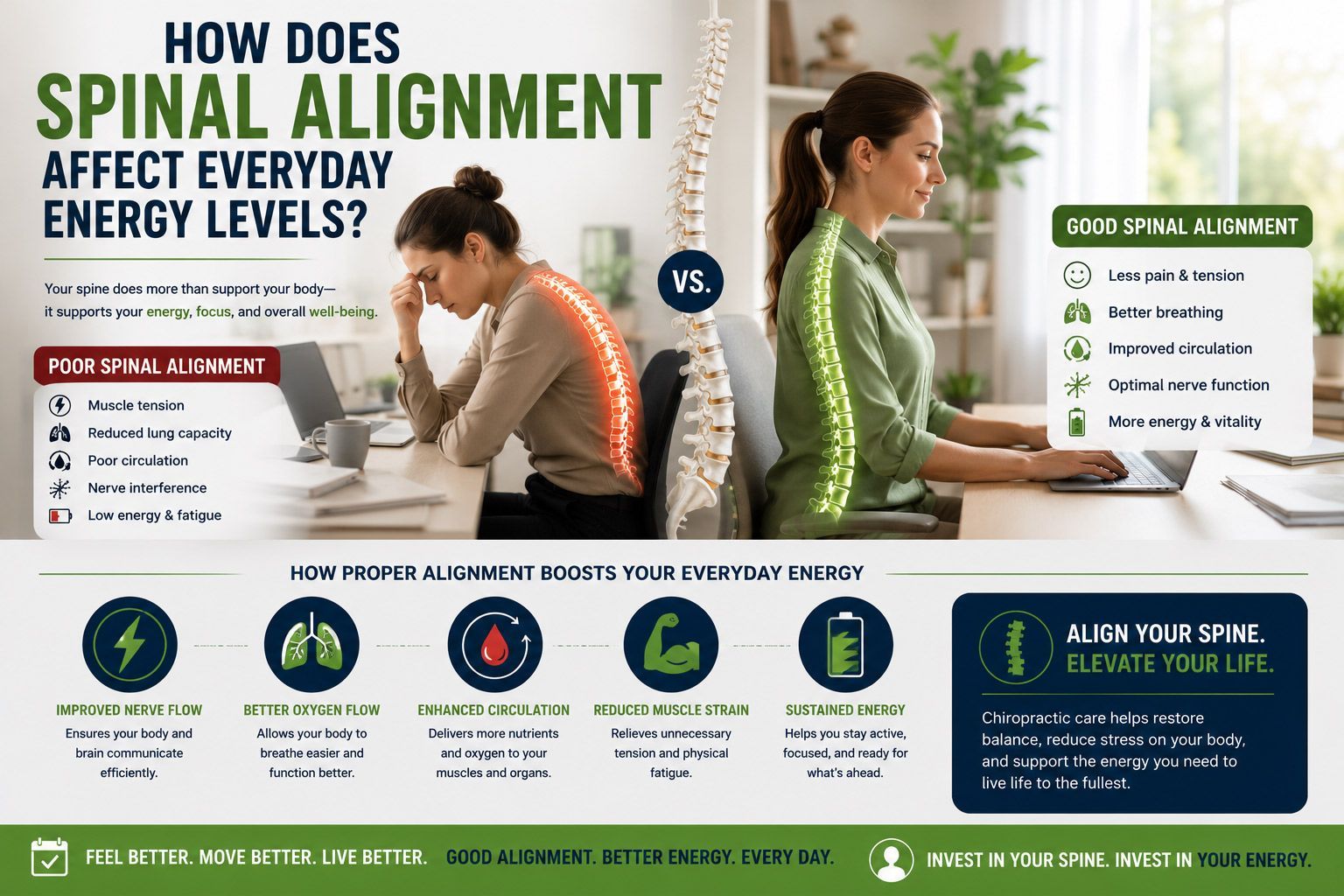
A Doctor of Chiropractic focuses on the diagnosis and treatment of neuromusculoskeletal disorders, with particular emphasis on the spine and its relationship to the nervous system. Chiropractic adjustments work at the joint level — restoring motion to restricted spinal and extremity joints, reducing nerve interference, and improving function throughout the body. Chiropractors are trained to diagnose, assess, and refer when appropriate.
Massage therapy
A licensed massage therapist focuses on soft tissue: muscles, tendons, ligaments, and fascia. Through techniques ranging from Swedish to deep tissue to trigger point therapy, massage therapists release muscular tension, improve local circulation, reduce fascial restrictions, and promote the kind of physical relaxation that supports recovery. Massage therapists assess the soft tissue but do not diagnose.
How the Two Disciplines Compare
The table below breaks down the most practically important differences to help you evaluate which is the better first step for your situation.
| Factor | Chiropractor | Massage Therapist |
|---|---|---|
| Primary target | Joints, spine, nervous system | Muscles, tendons, fascia |
| Best for | Joint restriction, nerve pain, sciatica, headaches, disc issues | Muscle tightness, soreness, stress, general tension |
| Credentials | Doctor of Chiropractic (DC) — doctoral-level training | Licensed Massage Therapist (LMT) — state-licensed |
| Can diagnose? | Yes — can assess, diagnose, and refer | No — assesses soft tissue only |
| Session length | 15–30 minutes (focused) | 30–90 minutes |
| Average cost | $20–$200 depending on model | $60–$150 per hour |
| Insurance coverage | Often covered under medical plans | Varies; sometimes covered |
| Relief profile | Can be immediate for joint-based pain | Gradual; relaxation-focused |
How to Decide Which to Book First
Use these steps to match your symptoms to the right starting point. Work through them in order.
- Check for nerve symptoms first. If you have numbness, tingling, or pain that radiates into an arm or leg, start with a chiropractor. These symptoms suggest nerve involvement that requires joint-level assessment before soft tissue work.
- Identify the character of the pain. Sharp, localized pain that worsens with specific movements typically points to a joint or disc issue — a chiropractic presentation. Dull, diffuse aching or soreness that covers a larger area suggests a muscular issue — a massage presentation.
- Consider the cause. Did the pain begin after a fall, accident, or sudden movement? Start with chiropractic to assess the structural component. Did it come on gradually from stress, repetitive movement, or prolonged sitting? Either discipline may apply, but massage is a reasonable starting point.
- Assess your primary goal. If you need relief from mechanical pain or functional limitation, start with chiropractic. If your main goal is general relaxation, stress relief, or muscle recovery, start with massage.
- When in doubt, choose chiropractic first. A Doctor of Chiropractic can diagnose the origin of your complaint and — if soft tissue work is the more appropriate intervention — will say so and guide you accordingly.
Why Many Patients in Cary, NC Choose Both
Chiropractic and massage are not competing options — they address different layers of the same problem and work extremely well together. Massage before an adjustment relaxes the muscles surrounding the target joint, allowing for a more effective and comfortable treatment. Massage after an adjustment helps the body integrate the change in a more relaxed state.
Many patients in Cary, NC and across the Triangle build both into a regular wellness routine: chiropractic to maintain joint alignment and nervous system function, massage to manage the muscular tension that builds between sessions. At $20 per adjustment at Crack Shack Chiropractic, adding chiropractic to an existing massage routine costs almost nothing.
Frequently Asked Questions
Can I get both in the same week?
Absolutely. The two therapies are complementary. Many patients receive massage and chiropractic in the same week with excellent results.
Is it better to get massage before or after an adjustment?
Both sequences have clinical merit. Massage before allows muscles to relax ahead of the adjustment. Massage after supports integration. Your providers can help you decide based on your specific goals.
Will a massage therapist refer me to a chiropractor if needed?
A well-trained therapist will recognize when a complaint is beyond their scope and refer appropriately. This is a sign of a trustworthy practitioner.
Can a chiropractor also perform soft tissue work?
Yes. Many chiropractors incorporate myofascial release, trigger point therapy, or instrument-assisted soft tissue mobilization into their sessions. Ask your provider what is included.
What if I genuinely cannot tell what kind of pain I have?
Start with a chiropractic evaluation. As a licensed diagnostician, a DC can identify the origin of your pain and direct you to the most appropriate care — chiropractic, massage, or both.
The Bottom Line
Neither discipline is universally better. They treat different things, and the best choice depends entirely on what your body is asking for. For joint pain, nerve symptoms, and structural complaints, chiropractic should come first. For muscular tension, stress relief, and recovery soreness, massage is an excellent starting point. For most people, the smartest approach is eventually both.
Crack Shack Chiropractic in Cary, NC makes it easy to start with chiropractic without a large financial commitment. At $20 per adjustment, finding out whether your complaint is chiropractic in nature has never been more accessible in the Triangle.