Why Can Chronic Back Pain Become More Expensive Over Time?
June 28, 2026
Introduction
Most chronic back pain does not begin with a dramatic injury.
For many people, especially adults balancing desk work, commuting, parenting, workouts, or physically repetitive jobs in Cary, North Carolina, the problem starts quietly. A sore lower back after driving. Tightness after standing too long. A dull ache that disappears after stretching.
Then routines slowly change around the pain.
People stop lifting certain things. They avoid long walks. They sleep differently. They sit carefully during meetings. They skip workouts they used to enjoy because recovery takes too long afterward.
Months later, the discomfort is no longer occasional. It becomes part of daily decision-making.
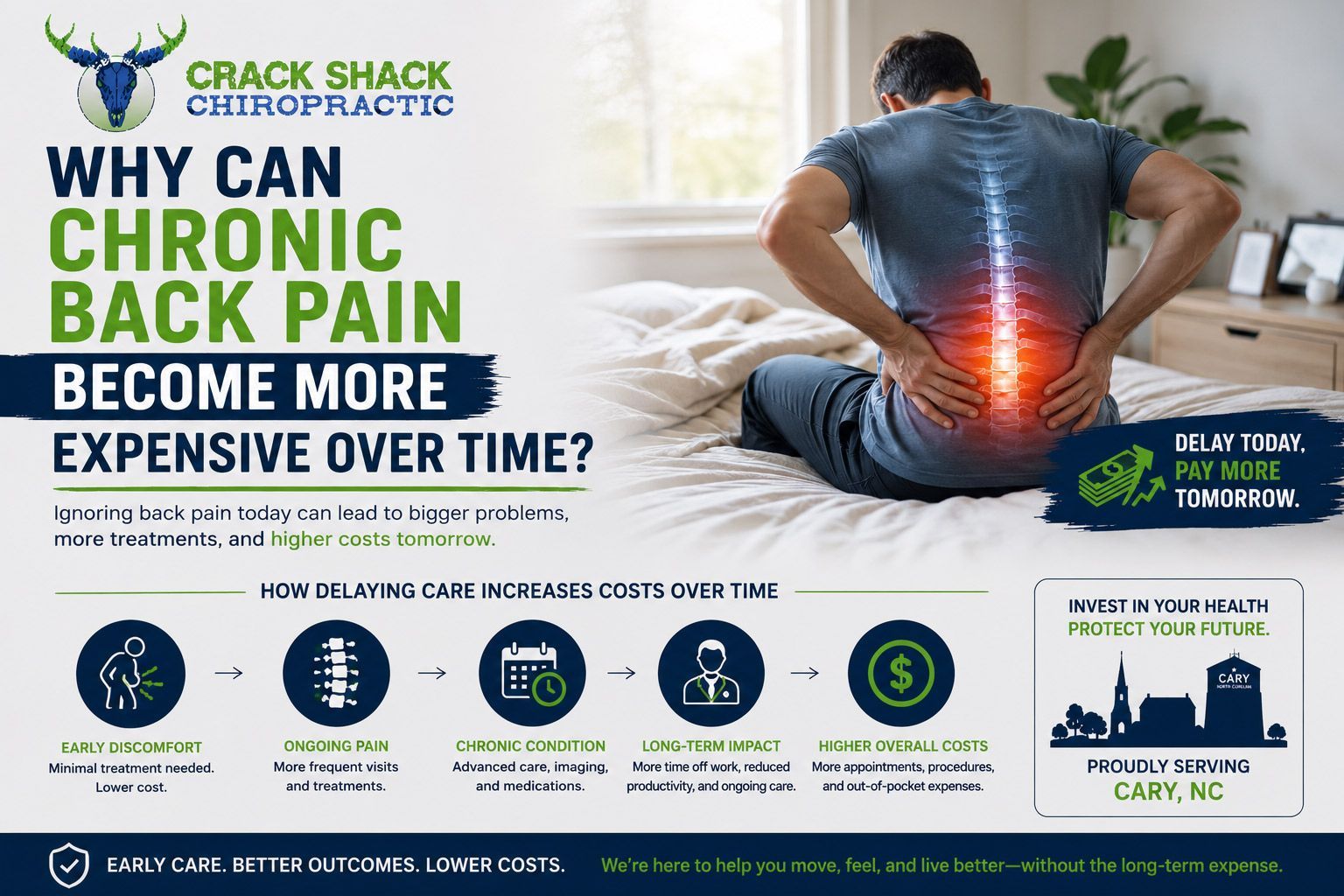
That shift is where chronic back pain often becomes more expensive — not just financially, but physically and functionally. The longer movement problems continue, the more they can affect mobility, work performance, exercise habits, recovery time, and overall quality of life.
Chronic Back Pain Often Creates Secondary Problems
One reason long-term back pain becomes more complicated is because the body adapts around it.
Pain changes movement.
Even subtle discomfort can cause someone to stand differently, shift weight unevenly, or limit certain motions without realizing it. Over time, those compensations can place additional strain on surrounding muscles and joints.
The Original Problem Is Not Always the Only Problem Later
A patient may initially experience mild lower back irritation, but months of compensation can eventually contribute to:
| Original Issue | Secondary Effect |
|---|---|
| Lower back stiffness | Hip tightness |
| Limited spinal mobility | Poor posture |
| Uneven weight distribution | Knee discomfort |
| Reduced activity levels | Muscle weakness |
| Pain while sitting | Neck and shoulder tension |
By the time many people finally seek treatment in Cary, North Carolina, they are often dealing with a chain of related movement problems instead of one isolated issue.
Delayed Care Can Increase Recovery Time
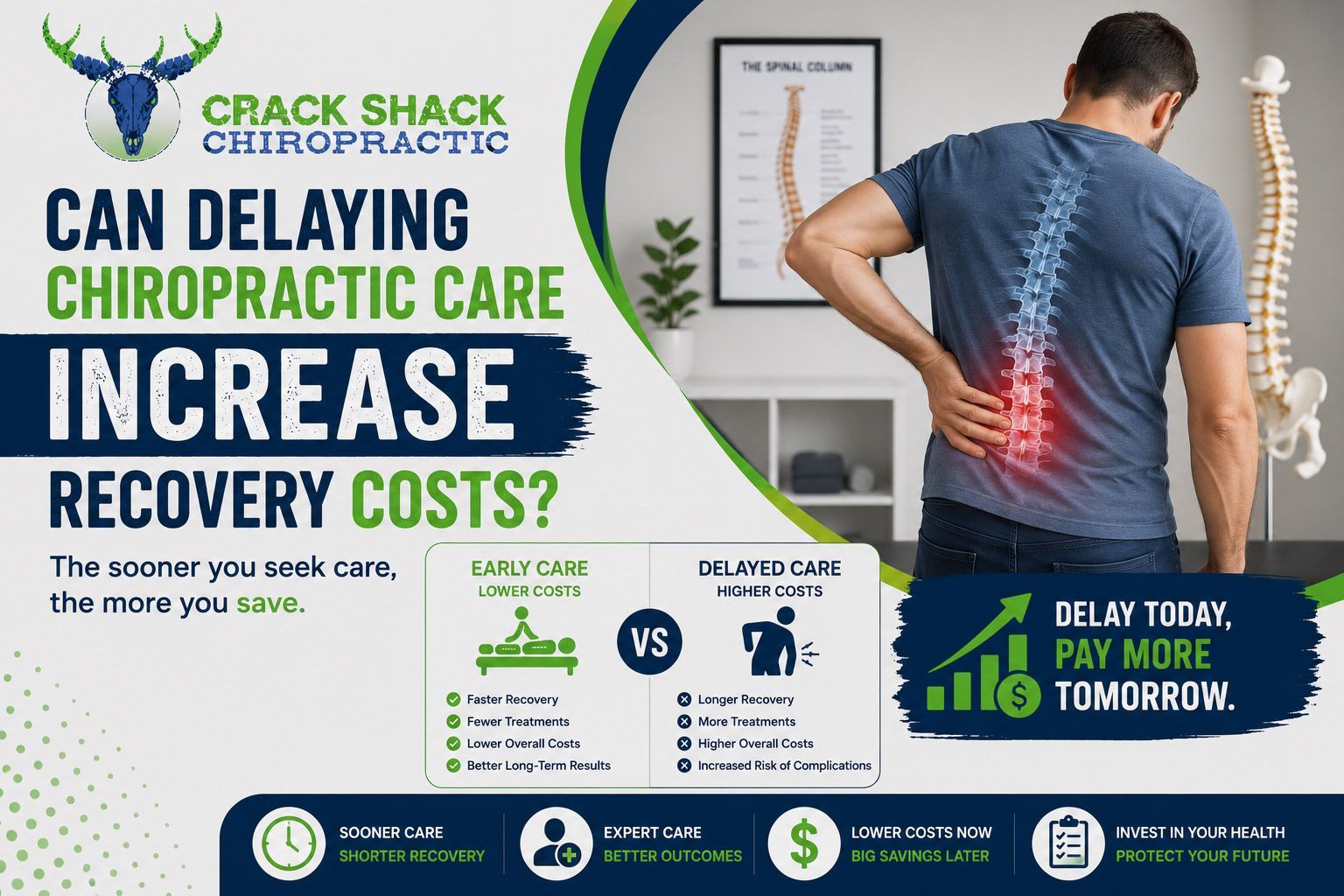
Recovery is usually simpler when dysfunction is addressed earlier.
That does not mean every minor ache requires immediate treatment. However, chronic pain often involves patterns that become more deeply established over time.
The Nervous System Adapts to Dysfunction
When movement restrictions persist for months or years, the body begins treating those patterns as normal.
This can lead to:
- Reduced flexibility
- Joint stiffness
- Muscle imbalance
- Ongoing inflammation
- Recurring pain flare-ups
At that stage, treatment may involve more than temporary symptom relief. The body may need gradual retraining to restore healthier movement patterns.
Long-Term Conditions Usually Require More Consistency
Acute pain sometimes improves relatively quickly. Chronic back pain usually requires a more structured recovery process.
That may include:
- Spinal adjustments
- Soft tissue therapy
- Mobility exercises
- Posture correction strategies
- Activity modifications
- Ongoing progress monitoring
The longer dysfunctional patterns continue, the more time the body may need to respond consistently.
Why Ignoring Back Pain Can Affect Daily Life Financially
The cost of chronic back pain is not limited to healthcare appointments.
Long-term discomfort often affects productivity, physical activity, and daily routines in ways people underestimate at first.
Reduced Productivity at Work
People with chronic back pain frequently experience:
- Difficulty sitting comfortably
- Reduced concentration
- Frequent movement breaks
- Lower physical endurance
- Sleep-related fatigue
For office workers in Cary, prolonged sitting may worsen lower back tension throughout the workday. For physically active workers, repetitive lifting or standing may become increasingly difficult over time.
Inactivity Can Create Additional Health Costs
Many people reduce physical activity when back pain becomes persistent.
Unfortunately, inactivity can create new problems that make recovery harder later.
Reduced movement may contribute to:
- Loss of core strength
- Weight gain
- Poor circulation
- Increased joint stress
- Reduced mobility
This cycle can gradually make chronic pain more difficult and more expensive to manage long-term.
Why Chronic Pain Often Requires More Comprehensive Treatment
A recent muscle strain and a five-year history of recurring lower back pain are rarely treated the same way.
Acute Pain Usually Has Fewer Complications
Short-term irritation may involve limited inflammation or temporary muscular tension without widespread compensation patterns.
These cases sometimes improve with relatively conservative treatment and simple activity adjustments.
Chronic Pain Often Involves Multiple Contributing Factors
Long-standing back pain may involve combinations of:
- Posture issues
- Sedentary work habits
- Core weakness
- Repetitive movement strain
- Mobility restrictions
- Old unresolved injuries
Because several factors may be contributing simultaneously, treatment often becomes more layered and individualized.
That is one reason chronic back pain care in Cary may involve more evaluation, rehabilitation guidance, and follow-up visits than short-term discomfort.
The Cost of “Managing” Pain Instead of Addressing It
A lot of people spend years trying to work around chronic discomfort instead of improving the underlying issue.
That often leads to ongoing spending in areas such as:
| Common Short-Term Solution | Potential Long-Term Issue |
|---|---|
| Frequent pain reliever use | Temporary symptom masking |
| Avoiding activity | Reduced mobility |
| Constant stretching only | No correction of movement dysfunction |
| Replacing mattresses or chairs repeatedly | Underlying spinal issues remain |
| Reducing exercise completely | Weakness and stiffness increase |
Many people eventually realize they were continuously adapting to pain instead of addressing why it kept returning.
How Chiropractic Care May Help Reduce Long-Term Recovery Costs
Chiropractic care is often focused on improving movement quality and reducing mechanical stress throughout the body.
For patients dealing with chronic back pain in Cary, North Carolina, treatment may focus on restoring mobility while helping patients identify habits that continue aggravating symptoms.
Earlier Intervention May Help Prevent Escalation
When movement restrictions are addressed earlier, patients may sometimes avoid the cycle where:
Pain → compensation → inactivity → weakness → worsening discomfort
Breaking that cycle early may reduce the likelihood of more involved recovery later.
Education Plays a Major Role
One overlooked part of chiropractic care is patient education.
Long-term recovery often depends on:
- Workplace ergonomics
- Daily posture habits
- Stretching routines
- Exercise modification
- Movement awareness
Without those changes, symptoms may repeatedly return even if short-term relief occurs.
Chronic Back Pain and Lifestyle in Cary, North Carolina
Chronic back pain affects people differently depending on their routines and activity levels.
In Cary, many residents balance:
- Desk-heavy work schedules
- Long commutes
- Fitness routines
- Parenting responsibilities
- Recreational sports
- Active lifestyles
When spinal discomfort begins interfering with those activities, the effects tend to extend beyond physical pain alone.
That is why many people eventually seek chiropractic care not just for symptom relief, but to maintain mobility and continue participating comfortably in daily life.
Frequently Asked Questions
Why does chronic back pain become harder to treat over time?
Long-term pain often involves muscle compensation, reduced mobility, and movement adaptations that become more established over time.
Can untreated back pain affect other parts of the body?
Yes. Compensation patterns may place extra stress on nearby muscles and joints, potentially affecting posture, hips, shoulders, or knees.
Does chronic back pain usually require more appointments?
Chronic conditions often need more consistent treatment and rehabilitation compared to recent or mild discomfort.
Can inactivity make back pain worse?
Reduced activity may contribute to stiffness, muscle weakness, and decreased mobility, which can sometimes worsen long-term discomfort.
When should recurring back pain be evaluated?
Persistent pain, reduced mobility, recurring flare-ups, or discomfort affecting daily activities may justify professional evaluation.
Conclusion
Chronic back pain often becomes more expensive over time because the body gradually adapts around dysfunction. What begins as occasional stiffness or mild discomfort can eventually affect posture, mobility, exercise habits, sleep quality, and everyday movement patterns.
For many people in Cary, North Carolina, addressing spinal discomfort earlier may help reduce the likelihood of prolonged recovery timelines, recurring compensation issues, and ongoing physical limitations. Consistent movement, healthy posture, and proper spinal function all contribute to long-term physical wellness and daily comfort.
At Crack Shack Chiropractic, patients can learn more about chiropractic care focused on mobility, recovery, and supporting healthier movement patterns through personalized treatment approaches.